
The wellness-ification playbook: why ‘functional’ products don’t make stickier subscriptions
Published July 2026
Published Jul 2026
Updated August 2026
Updated Aug 2026
7 min read
AI Summary
Functional and ritual products get skipped nearly 75% more than commodity staples and process fewer orders. Based on data from 20,000+ subscription brands.
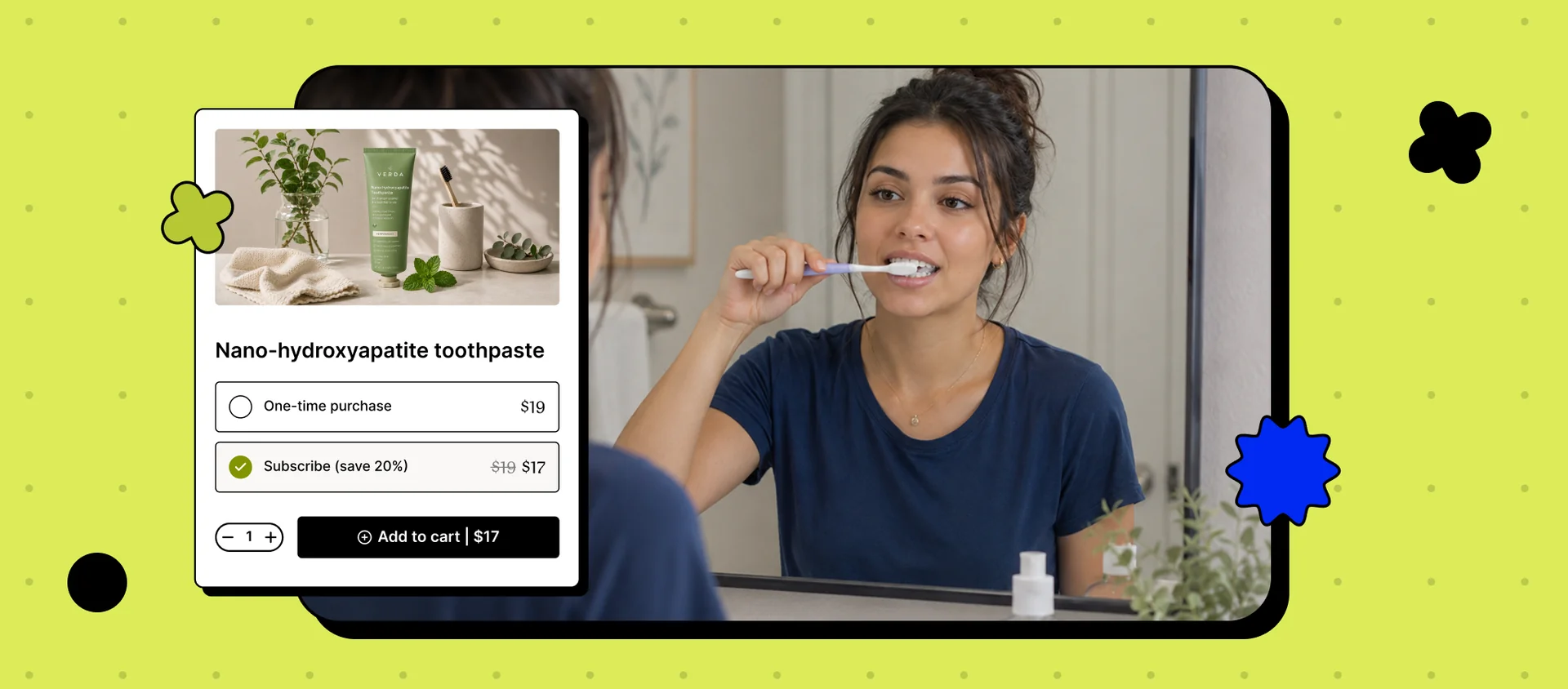
Toothpaste is going functional. Microbiome-friendly formulas, probiotics, hydroxyapatite: the same wellness playbook that turned supplements and skincare into premium daily rituals is now colonizing the toothpaste aisle.
The pitch to a builder is always the same. Add a mechanism, a strain or a mineral or, increasingly, a peptide, and a boring commodity becomes a ritual. And it becomes a ritual you can charge a premium for. Rituals mean loyalty, the pitch goes, and loyalty means stickier subscriptions.
So does it work? Short answer: not really. We went looking in the recurring cart, and the answer runs the other way.
Functional and ritual products retain worse than plain commodity staples on Recharge, not better. Across a trailing year of subscription renewals, functional and ritual products (probiotics, collagen, adaptogens, electrolytes) processed 69.5% of their scheduled orders, against 73.1% for commodity consumables like coffee, deodorant, and pet food. Subscribers skipped the functional ones nearly 75% more often.
Our take: functionalizing a category buys novelty and a higher price, not durability. If you’re building the functional toothpaste brand, plan for a subscription that behaves like a supplement, skip-heavy and churn-prone, and instrument skip and churn from day one.
Do functional products actually retain better than commodity staples?
Across Recharge’s data set, functional and ritual products process a smaller share of their scheduled orders than commodity staples, and get skipped nearly twice as often.
Start with the whole data set: every scheduled renewal over the trailing year, split into two buckets by what’s in the cart. Functional and ritual products are the wellness darlings, the probiotics, collagen, adaptogens, electrolytes, and vitamins. Commodity consumables are the unglamorous refills, the coffee, deodorant, shampoo, laundry, pet food, and razors.
The staples win on both measures that matter for a subscription.
| Class (all-store) | Subscribers | Process rate | Skip rate | Active-churn rate |
|---|---|---|---|---|
| Functional/Ritual | 8.0M | 69.5% | 6.9% | 17.5% |
| Commodity/Consumable | 14.4M | 73.1% | 4.0% | 16.8% |
Functional carts processed 69.5% of their scheduled orders, against 73.1% for commodity ones. On its own that gap is a few points, and we won’t dress it up as a chasm. The skip rate is where it gets loud. Functional subscribers skipped 6.9% of their orders against 4.0% for commodity, nearly 75% more often, and active churn runs a touch higher too. The products sold as sticky daily rituals are the ones quietly getting set aside.
Why doesn’t functionalizing a category make its subscription stickier?
Functionalizing a product (pretty sure this is a real word?) adds novelty and a higher price, and novelty is the opposite of the autopilot habit that makes a commodity refill sticky.
The premise sounds airtight. Give a shopper a reason to care, a mechanism and a benefit, and they stop treating the product as a chore and start treating it as a ritual. But a reason to care is also a reason to reconsider. A higher price invites comparison shopping. A new mechanism invites the next, better mechanism. And the honest question every functional subscriber asks eventually is “do I still need this?”
Commodity refills never trigger that question. You don’t audit your coffee or agonize over your deodorant. It ships, you use it, you forget about it, and that forgetting is exactly what keeps the subscription alive. Novelty is not habit. A ritual you think about is a ritual you can skip.
Is this a real category pattern, or just a few big brands?
The gap holds when you control for store mix, and it actually widens: at the median store, functional products process about 8 points fewer of their scheduled orders than commodity ones.
A platform average can always be dragged around by a handful of big brands, so we checked the pattern two more ways. First, a same-store cohort of brands that were already active before the window, measured against themselves. Then the median store, giving every shop equal weight instead of letting the giants dominate.
| Lens | Functional process rate | Commodity process rate | Functional skip rate | Commodity skip rate |
|---|---|---|---|---|
| All-store aggregate | 69.5% | 73.1% | 6.9% | 4.0% |
| Same-store aggregate | 70.0% | 74.2% | 7.0% | 4.0% |
| Merchant-level median | 67.5% | 75.8% | 7.9% | 6.3% |
The gap didn’t shrink under either test. It grew. At the median store, functional products processed 67.5% of scheduled orders against 75.8% for commodity ones, an 8-point spread that holds across more than 3,600 shops. That’s the tell: when a pattern survives a same-store cohort and gets wider at the median store, it’s category behavior, not a mix artifact. Seeing it takes the kind of cross-brand, same-store view behind our Subscription Trend Report, and it’s the read every operator should run on their own catalog before trusting a blended number.
What does this forecast for toothpaste?
We can’t watch a category flip from commodity to functional in the data, because nothing switches the day a brand rebrands around a mechanism. So this is a forecast built from where categories sit on the functional spectrum today, not a before-and-after of toothpaste itself.
With that said, oral care is already on the board, and it already fits the pattern.
| Segment | Stores | Process rate | Skip rate | Active-churn rate |
|---|---|---|---|---|
| Oral care (supporting context, thin base) | 273 | 65.7% | 5.7% | 20.2% |
Oral care products on Recharge process about 65.7% of their scheduled orders, with a 20.2% active-churn rate. That sits on a thin base of 273 stores, so read it as a signal rather than a headline. But the direction lines up with everything above: a category already partway into its functional era retains like a functional one, not a commodity one. Toothpaste isn’t at risk of losing a retention edge it never had. If you’re building here, plan the subscription like a supplement, not like a razor refill.
How do you build a functional subscription anyway?
You can build a durable functional subscription. You just have to build it to combat skip and churn from day one, not coast on autopilot loyalty. The same-store read points to four moves.
- Instrument process rate and skip rate by product class from day one. A blended retention number will hide exactly the gap that matters, so read your own subscription analytics same-store and by category.
- Design for skip, not just for cancel. Make skipping and pausing easy, treat a skip as an engaged subscriber staying in control of a cart they care about, and use the time before the next order to add value.
- Assume novelty churn and build for it. Functional carts get skipped and cancelled more, so lean on churn prevention: cancellation-prevention flows and win-backs tuned for a shopper who’s paying attention. The men’s-grooming brand Tiege Hanley did exactly this, cutting churn sharply with cancellation-prevention flows.
- Monetize the basket, not the myth of loyalty. Since the durable value is in the order rather than the habit, cross-sell and bundle to grow order value while the subscriber is engaged.
The through-line is visibility. You can only run this play if your platform shows you retention by product class, same-store, which is the read most health and wellness brands never get on their current setup.
About this report
These insights come from Recharge subscription data across the trailing twelve months, July 2025 through June 2026, covering scheduled renewal cycles in that window.
We sorted subscribed products into functional/ritual and commodity/consumable buckets by their titles, then measured how reliably each bucket’s scheduled orders processed and how often they were skipped. To make sure the pattern wasn’t a few big brands, we re-checked it two ways: against a same-store cohort of brands active before the window, and against the median store across more than 3,600 shops. It held both times.
Two caveats worth stating plainly. First, this is a cross-category comparison, not a before-and-after. We have no marker for the day a category “went functional,” so the functional-versus-commodity gap stands in as a forecast for oral care rather than a measured transition of toothpaste itself. Second, the classification is coarse, drawn from product titles, and the oral-care cut rests on a thin base of 273 stores, so treat it as supporting context, not a headline. Every figure is aggregated across brands. No single merchant’s numbers appear.
Frequently asked questions
No. On Recharge, functional and ritual products processed 69.5% of their scheduled orders against 73.1% for commodity staples, and subscribers skipped them nearly 75% more often. They command a higher price and more novelty, not more loyalty.
Yes, but build them for engagement, not autopilot. These carts get skipped and cancelled more often, so they need active churn prevention and basket growth rather than a set-and-forget refill assumption.
Oral care already shows the weaker retention profile typical of functional categories, even before it finishes going functional, so plan a functional toothpaste subscription like a supplement, not a loyal refill.
Categories

Related articles
Explore additional content that complements what you’ve just read.
The quarterly upgrade: subscription retention’s most underused lever
CPG product sampling: why a $0.99 intro offer retains subscribers nearly 4× better than a free one
The first-order discount sweet spot for CPG subscription brands is deeper than you think
There’s a fresh wave of pet-food M&A, and the subscription data shows what’s actually worth the premium
Menopause: the unsexy subscription category that outlasts fertility