
Shopify’s betting agentic commerce will become the default for product discovery. What does that mean for subscriptions?
Published June 2026
Published Jun 2026
Updated August 2026
Updated Aug 2026
11 min read
AI Summary
AI is taking over product discovery. On Recharge, ~77% of subscription revenue is the orders after the first sale. Based on data from 20,000+ subscription brands.
Shopify’s Spring ’26 Edition made it official: a lot of (pre)shopping is about to happen inside your LLM du jour.
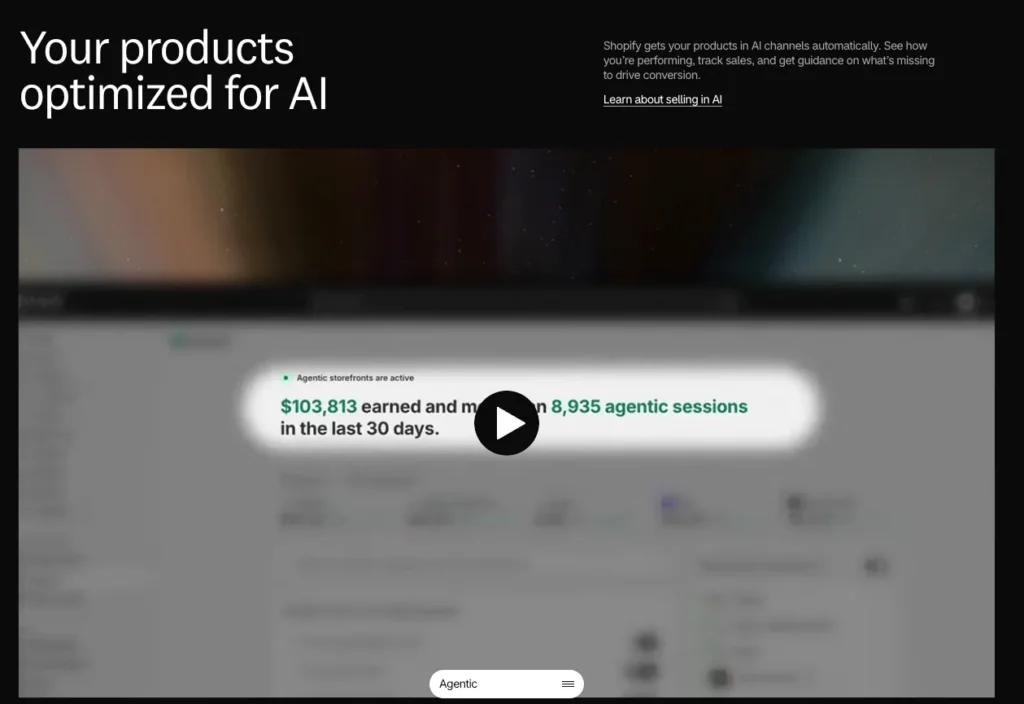
Agents will find the product, compare it, and, increasingly, buy it on your behalf. And Shopify’s building the rails to help merchants take advantage. Which is amazing. But it also raises an existential question.
If an agent owns discovery and can send your customer somewhere else next time, what do YOU actually own?
It’s one thing when you’re paying for ads, or seeding influencers, or driving traffic through organic content. It’s another entirely when someone’s purchase decision is entrusted to an agent. If all the discovery is happening in an LLM, all you’ll really own’s the checkout. Fortunately, that’s the best part.
After that initial checkout driven by an LLM, that’s where the real work starts (and where the real money is made, for subscription brands at least).
Because the first checkout order is only about 23% of all subscription revenue.
The orders that come after it, the renewals, account for about 77% of subscription revenue (and roughly 71.5% of those renewals process on their own, with no storefront visit and no new buying decision). That’s revenue an agent never gets between you and the customer on.
The move for subscription operators isn’t to out-rank an agent on discovery: it’s to make those renewals process reliably and to merchandise into the subscriptions you already have.
What Shopify actually shipped in the Spring ’26 Edition
The latest Edition is Shopify’s bet that shopping keeps moving into AI surfaces, so it shipped the pieces to make that work for merchants.
These three are most worth understanding in the context of agentic shopping:
The Universal Commerce Protocol
The Universal Commerce Protocol (UCP) is the standard underneath it: a shared language for platforms, agents, and businesses that Shopify built with Google, Microsoft, Meta, Stripe, Amazon, Walmart, and dozens of others. The idea is that one agent can search a catalog, build a cart, and check out at any participating store without a bespoke integration for each one, across the whole journey from discovery to post-purchase. It rides on the new agent standards (the Model Context Protocol, plus agent-to-agent and agent-payment protocols), and it’s written so the business stays the merchant of record and keeps the customer relationship. The concrete version for a Shopify merchant: shopping in Microsoft Copilot, and soon Meta ads, runs on UCP, the customer buys in the chat and pays with Shop Pay, and you still own the sale. It’s the plumbing that lets an AI surface finish a real purchase instead of bouncing the shopper back to a website.

Catalog and the MCPs
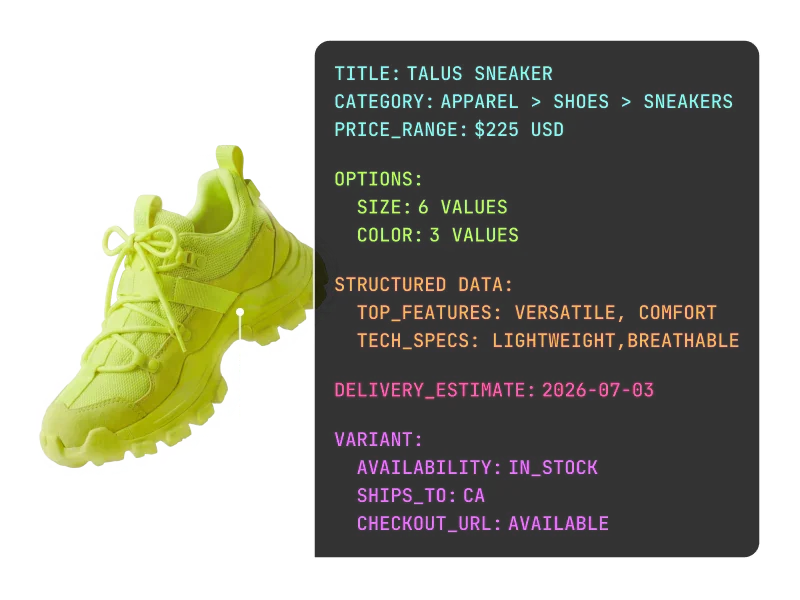
This is the piece that decides whether an agent can even find and recommend you, and it comes down to structured product data. The Catalog API turns your storefront into clean, machine-readable data an agent can query, and the Cart and Checkout MCPs let it act on what it finds, taking a shopper from “find me a magnesium supplement that ships monthly” to a placed order without a human ever loading your site. Shopify says data syndicated through Catalog drives 2x more conversion in AI chats, which is really a point about hygiene: the better structured your product data, the more often an agent picks you. Think of it as the next SEO, except the thing reading your catalog is a model deciding what to recommend, not a crawler deciding how to rank you.
The Agentic plan
The Agentic plan is the tell for how far Shopify thinks this goes. It lets businesses that aren’t even on Shopify sync their products into Shopify’s Catalog and sell across AI channels and the Shop app. Sit with that: Shopify is willing to host outside merchants’ catalogs on its own infrastructure just to make the agent layer rich enough that people shop there. A platform doesn’t open its front door to non-customers if it thinks the trend is optional. Shopify isn’t betting on whether agentic discovery happens, it’s trying to own the standard it runs on.
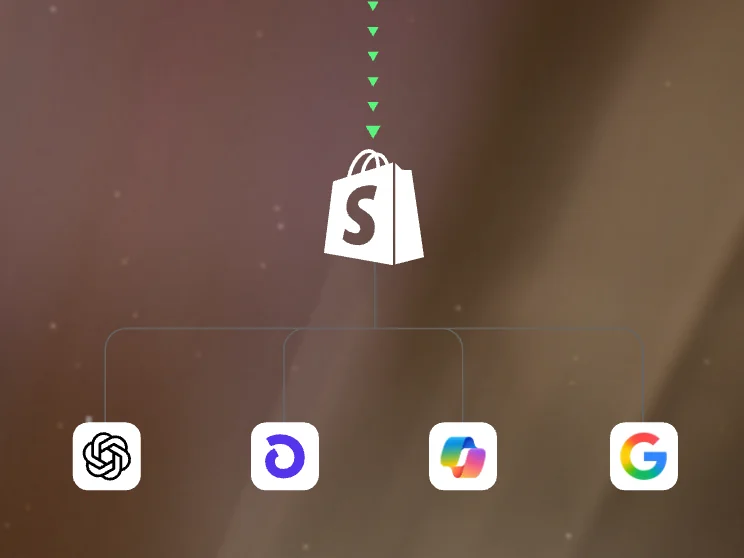
Put together, these point one direction: discovery is becoming an open, agent-queryable layer that no single merchant controls. Scary? Maybe.
Shopify’s assuaging potential concern by ensuring merchants continued ownership of the checkout.
So it’s worth asking: in a world where discoverability’s out of your hands, what’s the checkout is actually worth?
What does agentic discovery mean for subscriptions?
Agentic discovery is going to be a real channel, and subscription brands should treat it as one. But it’s far less existential for them than for almost anyone else selling online.
For a brand that lives or dies on the first sale, an agent steering the category threatens the whole business. For a subscription brand, that first sale is the smaller part of the picture.
Agentic discovery competes for the 23%, not the 77%. It’s another way to get in front of new people, alongside paid, social, and influencers, and you’ll want to be good at it. It just doesn’t put the bulk of a subscription business on the table the way it does for a brand selling a single one-time product.
| Year | Subscription revenue | Recurring orders (renewals) | Recurring share | First checkout order | First-order share |
|---|---|---|---|---|---|
| 2023 | $7,177.8M | $5,658.9M | 78.8% | $1,518.9M | 21.2% |
| 2024 | $8,826.1M | $6,921.1M | 78.4% | $1,905.0M | 21.6% |
| 2025 | $11,759.1M | $9,072.7M | 77.2% | $2,686.3M | 22.8% |
In 2025 that recurring share was about $9.07B of subscription revenue. By order count the picture is even starker: roughly 81% of all subscription orders are repeat orders, 185.1M of them against 43.0M first orders.
So the order an agent fights over (with organic, paid, etc), the first one, is the smaller slice on both dollars and volume. The bulk of a subscription business is everything that comes after it.
Why agents don’t touch the orders after the first
Agents don’t touch those orders because, rather obviously, a renewal doesn’t require the same pre-checkout conversion path.
About 71.5% of the renewals that come due process automatically, with no storefront visit, no cart, and no new buying decision. There’s simply no discovery step in the loop for an agent to influence.
That doesn’t make agents harmless to your existing base. A subscriber who’s gone lukewarm can ask an agent for a better option, and it will happily produce one, so agents still matter for the parts of your business that run through discovery: winning new subscribers, driving expansion, and staying in the consideration set when someone goes looking.
They just don’t sit in the middle of a healthy renewal the way they sit in the middle of a first purchase. The revenue exposure is smaller, but the optimization job doesn’t disappear.
You can see the weight of that in a single year’s subscribers. Take everyone who started a subscription in 2023 and follow their orders. The first orders added up to about $1.72B. Every order those same subscribers placed after the first added up to about $6.03B, roughly 3.5 times more. That didn’t take winning the customer again at discovery, but it wasn’t free either. It took a product worth reordering, good offers in the portal, and real retention marketing. It took being a good operator. What it didn’t take was going back out and beating an agent for the sale, order after order.
| Orders from the 2023 subscriber group | Subscriptions that reached it | Revenue |
|---|---|---|
| First order | 45.7M | $1,718.9M |
| Every order after the first | 166.0M | $6,032.5M |
Now, of that 2023 group, about 49% placed a second order and only about 8% were still going by a twelfth. Individual subscriptions decay, order over order. The durability isn’t in any one subscription lasting; it’s in the aggregate.
New subscribers plus the renewals that do process more than replace the ones that lapse, and the recurring revenue base grew about 60% in two years, from $5.66B to $9.07B.
As a separate read on the same idea, the existing base of Recharge merchants now generates more than it did a year earlier: net revenue retention crossed 100% in the middle of 2025 and reached about 104% by the first quarter of 2026. That last figure is store-level, a measure of merchants staying and growing, not the same thing as a shopper’s renewals, but it points the same way.
The recurring base holds, and it compounds.
So the honest take isn’t “ignore agents.”
It’s that a subscription brand can afford to be less afraid of them than a single-product brand, because the base carries the business while you adapt. You still have to optimize for the agentic shopping experience, and before long for the agentic shopper itself.
You just get to do it from a position of strength instead of fear.
So is keeping the checkout enough?
Nope.
Keeping the checkout matters, and Shopify is right that the payment still runs through the merchant. But “we kept the checkout” is the wrong thing to feel safe about, because the checkout was never the part most exposed to an agent.
The exposure is at discovery, the moment a shopper is choosing what to buy, and that pressure is real whether or not the final tap happens in your checkout.
For a subscription brand the genuinely reassuring part isn’t that you kept the checkout. It’s that the checkout was never where most of the relationship, or most of the revenue, lived.
What this means for your owned assets (like your customer portal)
Even as agents take over discovery, managing a subscription still needs a space the merchant owns, which keeps the customer portal central.
Agents may take over finding products and even placing the first order. But managing a subscription is genuinely messy work: skipping a shipment, swapping a flavor, changing the cadence, pausing for a month, talking yourself out of a cancel at the right moment. That complexity needs a space the merchant owns and controls, and a customer portal built for it isn’t moving to a generic agent surface any time soon.
The discovery layer is broadening. But the ordering-and-management layer for an ongoing relationship stays with the brand.
What subscription operators should do about it
None of this is a reason to sit out agentic commerce. It’s a reason to be clear about what to optimize, and in what order.
- Show up in the agent layer, just don’t bet the business on it. Structured product data is becoming table stakes, so treat catalog hygiene the way you once treated SEO, and compete hard for that first sale knowing it’s a slice of the whole.
- Put the real weight on retention, because that’s where most of the revenue is. Make the renewals process by recovering failed payments and preventing the cancels you can prevent, and keep earning the next order with a product and a portal worth staying for.
- Grow inside the base. Merchandising into the subscriptions you already have with upsell and cross-sell compounds on revenue no agent is competing for, which makes it the cheapest growth you’ve got.
- Know your real exposure. Pull your split of first-order versus recurring revenue in subscription analytics so you can size your agentic-commerce effort to it. If you’re mostly recurring, you get to optimize for agents with ambition instead of fear.
About this report
This is based on Recharge platform data across more than 20,000 subscription brands on Shopify. The revenue-split figures cover the full calendar years 2023 through 2025 and measure subscription sales before tax; the recurring share is the part of subscription revenue that comes from orders after a subscriber’s first. The renewal process rate covers the trailing twelve months through May 2026. The single-year subscriber view follows everyone who started a subscription in 2023 and tracks their orders in order sequence. The store-level retention figures are year over year through the first quarter of 2026. Everything is aggregated across brands, with no individual store identified, and these are associations rather than proof of cause. The Shopify Spring ’26 details are Shopify’s own, from its Editions page.
Frequently asked questions
It’s shopping where an AI agent handles discovery, and sometimes the purchase, on a buyer’s behalf, querying product catalogs across retailers instead of the shopper browsing one store.
It pressures discovery and the first order. But the orders that come after the first, about 77% of subscription revenue on Recharge, process automatically, and that’s the part an agent doesn’t get between you and the customer on.
tl;dr: Agentic discovery is real, and subscription brands should optimize for it, but it’s less existential for them than for single-product brands. On Recharge only about 23% of subscription revenue is the first order; the rest comes after it and mostly processes on its own. So compete for that first sale with ambition rather than fear, and put the real weight on keeping and growing the base agents don’t re-run.
Categories

Related articles
Explore additional content that complements what you’ve just read.

Inside ChargeX East: How the best brands are driving retention in the agentic era
2026 Black Friday marketing strategy for subscription brands
The quarterly upgrade: subscription retention’s most underused lever
CPG product sampling: why a $0.99 intro offer retains subscribers nearly 4× better than a free one
The first-order discount sweet spot for CPG subscription brands is deeper than you think