
10 great examples of ecommerce subscription businesses
Published October 2015
Published Oct 2015
10 min read
AI Summary
Subscriptions strengthen customer relationships by aligning with the way people already use the products they rely on. Across more than 20,000 brands on Recharge, the categories with the highest retention share a common pattern: their products support repeatable routines, so the subscription becomes the easiest way to stay stocked.
Subscriptions strengthen customer relationships by aligning with the way people already use the products they rely on. Across more than 20,000 brands on Recharge, the categories with the highest retention share a common pattern: their products support repeatable routines, so the subscription becomes the easiest way to stay stocked. As a result, certain verticals consistently outperform others in active subscriber lifespan and reorder cadence.
This guide highlights five of those subscription-ready verticals and showcases 10 brands that exemplify strong execution. Together, they illustrate a straightforward principle: when the product and subscription experience move in the same direction, customers stay engaged for the long term.
Key Subscription Model Definitions
Subscription-only products: Brands that offer their products exclusively through recurring deliveries. These models work best when the product is highly consumable, essential, or tied to a predictable usage cycle.
Subscription+ one-time purchase options: Brands that allow customers to buy once or opt into a subscription for convenience, savings, or personalization. This flexible model supports both new customers exploring the product and loyal customers ready for automated replenishment.
Health & Wellness Subscription Businesses
Health and wellness products tend to perform well with subscriptions because customer routines require consistent use, with some products requiring long-term use to see the desired results. In either case, shoppers prefer deliveries that arrive on time to avoid the frustration of running out or losing momentum. Across Recharge merchants, this vertical often shows longer subscriber lifecycles and steady reorder patterns, which makes it a natural fit for automated replenishment.
Vital Proteins

At-a-glance summary: Vital Proteins offers collagen powders, gummies, drinks, and supplements that support daily wellness routines. Their products are consumed consistently, which makes them a strong fit for automated replenishment and long-term subscription engagement.
Subscription business model: Subscription + one-time purchase
Positioning: Vital Proteins aims to help their customers live fuller, more vibrant lives through their collagen products, which may support hair, skin, nails, and joints.
How they use subscriptions: Vital Proteins encourages customers to incorporate collagen into their daily rituals by offering flexible recurring deliveries. Shoppers choose their preferred format—powders, drinks, bars, or gummies—and set a cadence that aligns with their consumption habits. The subscribe-and-save program provides meaningful savings on the first and subsequent orders, making the recurring option more compelling than one-time purchases. With perks like free shipping, free samples, and easy cadence adjustments, the subscription becomes a seamless extension of the customer’s wellness routine.
LOLA
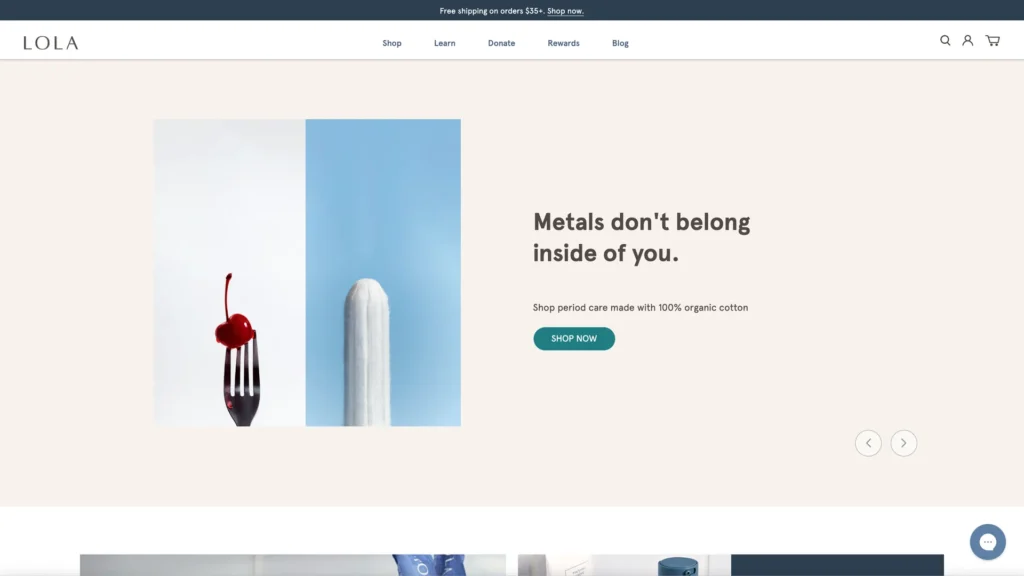
At-a-glance summary: LOLA provides period care, vaginal health, and sexual wellness products designed for predictable monthly use. Their essentials align naturally with replenishment subscriptions that simplify routine restocking.
Subscription business model: Subscription + one-time purchase
Positioning: LOLA removes friction and stigma from reproductive care with products designed for transparency and ease.
How they use subscriptions: LOLA’s subscription model supports the recurring nature of menstrual and reproductive care by allowing customers to build personalized assortments of tampons, pads, liners, and wellness products. Users choose their preferred quantities and delivery timing, ensuring they always have the right essentials on hand. The ability to adjust items within each shipment gives subscribers a sense of control, while the automated cadence removes the stress of last-minute store runs. Their optional donation add-on reinforces the brand’s mission and deepens customer loyalty.
Food & Beverage Subscription Businesses
Food and beverage brands see similar advantages. These products inspire brand loyalty and are consumed consistently. High-frequency use paired with variety-seeking behavior give brands a clear path to retention, especially when subscribers have the flexibility to adjust flavors or quantities over time.
Oats Overnight

At-a-glance summary: Oats Overnight offers high-protein, nutrient-dense overnight oats in multiple flavors. Because the product is designed for daily breakfast routines, it aligns well with replenishment subscriptions that keep customers stocked each week.
Subscription business model: Subscription + one-time purchase
Positioning: Oats Overnight highlights convenience, flavor variety, and nutritional quality.
How they use subscriptions: Oats Overnight’s subscription experience centers on personalization and consistency. Customers build their own box from a rotating selection of flavors and set a delivery schedule that reflects how often they eat the product. Subscribers save on every shipment and can easily swap flavors to keep breakfast exciting. This balance of flexibility, savings, and routine drives strong retention within a category built around daily habits.
Bokksu
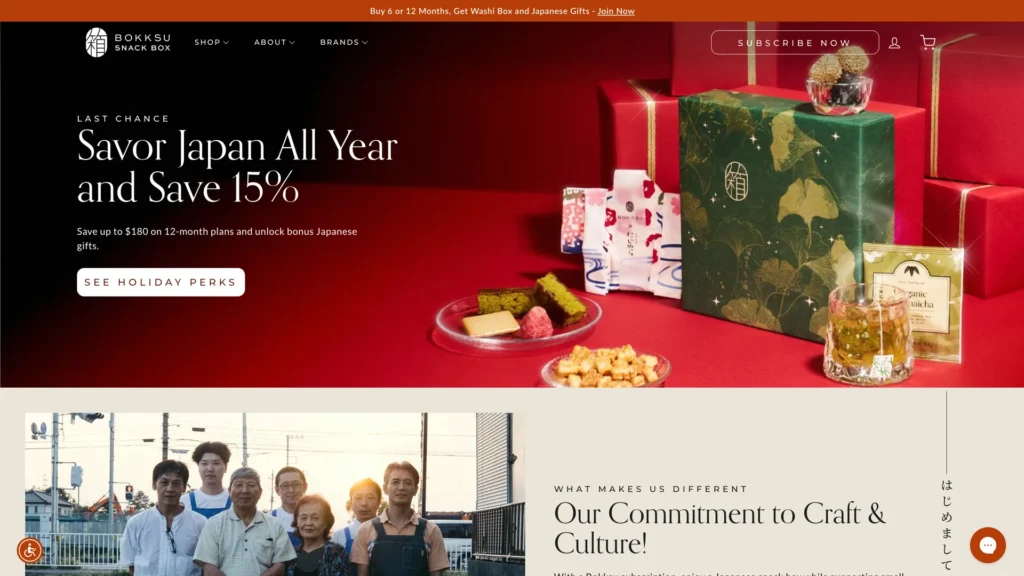
At-a-glance summary: Bokksu delivers curated Japanese snack boxes featuring artisan treats, candies, and teas sourced from local makers. The curated, discovery-driven experience makes it ideal for a subscription model centered around monthly delight.
Subscription business model: Subscription only
Positioning: Bokksu focuses on cultural authenticity and direct partnerships with long-standing Japanese snack makers.
How they use subscriptions: Bokksu leans into the excitement of discovery by offering a curated, themed box each month filled with regional specialties. Subscribers choose a billing cycle that suits their budget, with discounts available for longer commitments. Every box includes a cultural guide that deepens the experience and reinforces the value of staying subscribed. The combination of novelty, education, and premium curation keeps customers engaged month after month.
Beauty & Personal Care Subscription Businesses
Beauty and personal care products lend themselves to predictable cycles. Customers rely on items like razors and oral care products at consistent intervals, so subscriptions help them maintain routines without interruption. Brands that offer flexible refills or kit-based replenishment tend to see stronger repeat rates in this category because shoppers value convenience over re-purchasing every few weeks.
Billie
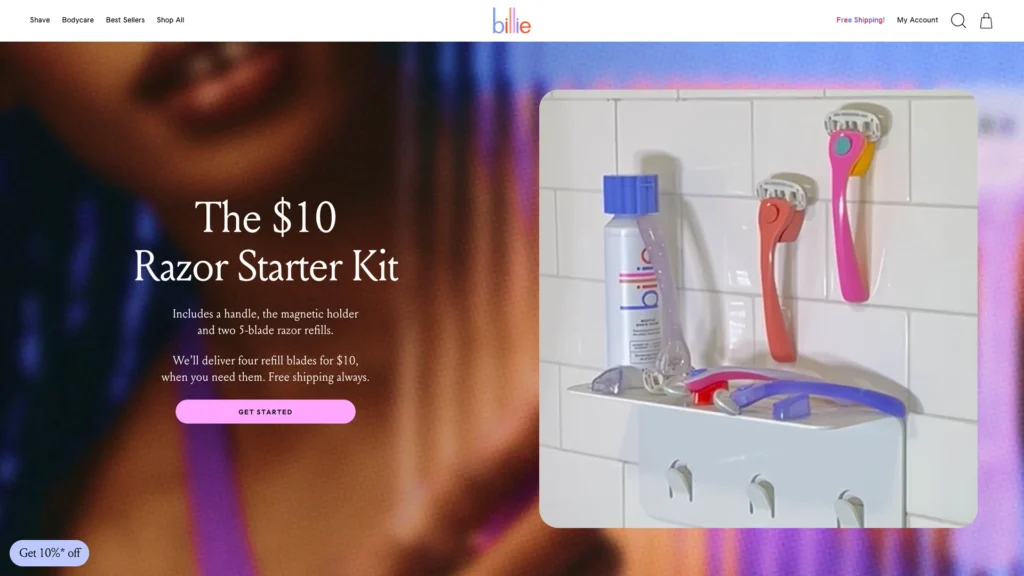
At-a-glance summary: Billie offers award-winning razors and blade refills made for consistent grooming routines. Their products require regular replenishment, making subscriptions a practical way for customers to maintain their shaving habits.
Subscription business model: Subscription only
Positioning: Billie emphasizes clean ingredients, quality, and affordability without the pink tax.
How they use subscriptions: Billie’s subscription model centers on simplicity. Customers start by choosing a razor starter kit, then select how often they want refill blades delivered based on their shaving routine. The predictable cadence ensures customers always have fresh blades, while built-in savings make the subscription more appealing than buying refills in-store. With easy customization and skips, Billie’s subscription removes friction from an essential personal care task.
Home Subscription Businesses
Home essentials follow strict usage patterns, which makes predictability especially important. Parents and households rely on a steady supply of items like diapers and cleaning goods, so subscriptions remove the risk of running out. Brands benefit from this cadence as well, since replenishment cycles often mirror real-life consumption and build long-term reliability.
Hello Bello
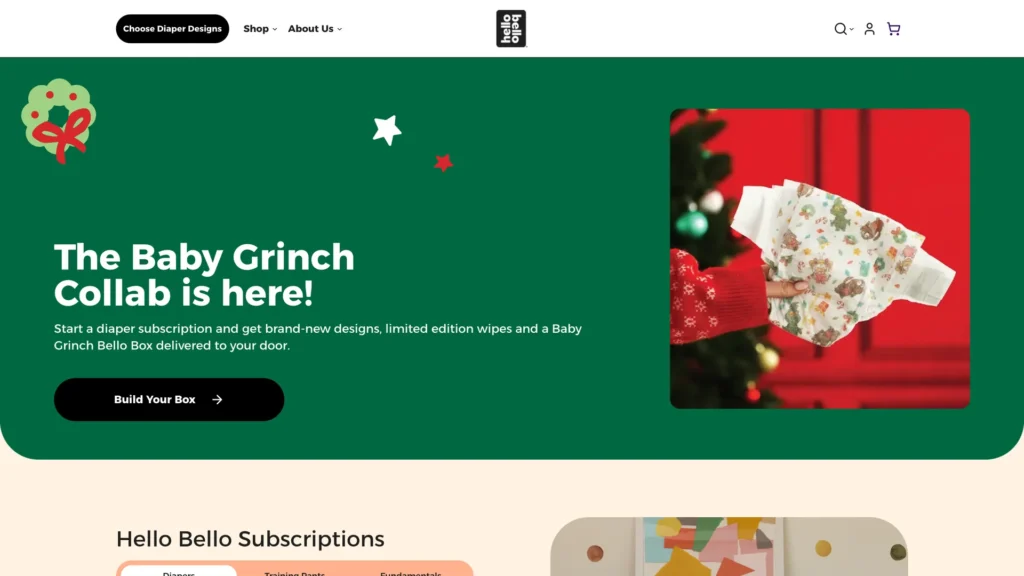
At-a-glance summary: Hello Bello provides diapers, training pants, and baby care essentials designed for frequent, predictable use. Subscriptions ensure families always have the supplies they need while saving time and effort.
Subscription business model: Subscription + one-time purchase
Positioning: Hello Bello appeals to parents seeking accessible, premium-quality baby and household products.
How they use subscriptions: Hello Bello’s bundle builder guides parents through selecting diaper sizes, designs, and add-on essentials, creating a subscription box tailored to their child’s needs. Deliveries follow a reliable five-week cadence to match real-life usage patterns. Subscribers receive exclusive designs, discounts, and free gifts, making the subscription both a convenience and a value-driven choice for busy families.
Pet Subscription Businesses
Pet care is one of the most subscription-ready verticals because feeding, hygiene, and litter routines follow precise schedules. Pet owners value anything that simplifies ongoing responsibilities, so reliable deliveries give them confidence that essentials will arrive on time. As a result, brands with transparent sourcing, steady cadences, and flexible order management often see strong retention in this category.
Open Farm
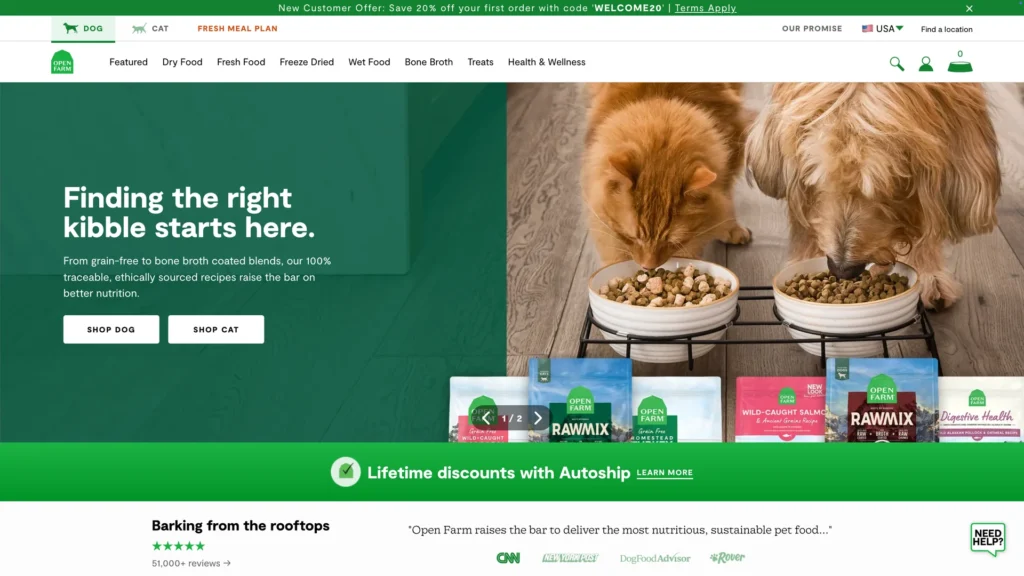
At-a-glance summary: Open Farm offers ethically sourced dog and cat food, treats, and supplements. These products follow consistent feeding routines, making replenishment subscriptions a strong fit for pet parents who value convenience.
Subscription business model: Subscription + one-time purchase
Positioning: Open Farm focuses on traceability, humane sourcing, and sustainability.
How they use subscriptions: Open Farm’s subscription model supports routine pet feeding by letting customers automate deliveries of food, treats, and supplements. Shoppers can select specific recipes, set the cadence based on their pets’ needs, and save through subscribe-and-save pricing. Flexible scheduling, the ability to modify orders, and transparent sourcing details build trust and encourage ongoing commitment.
Fuzzball
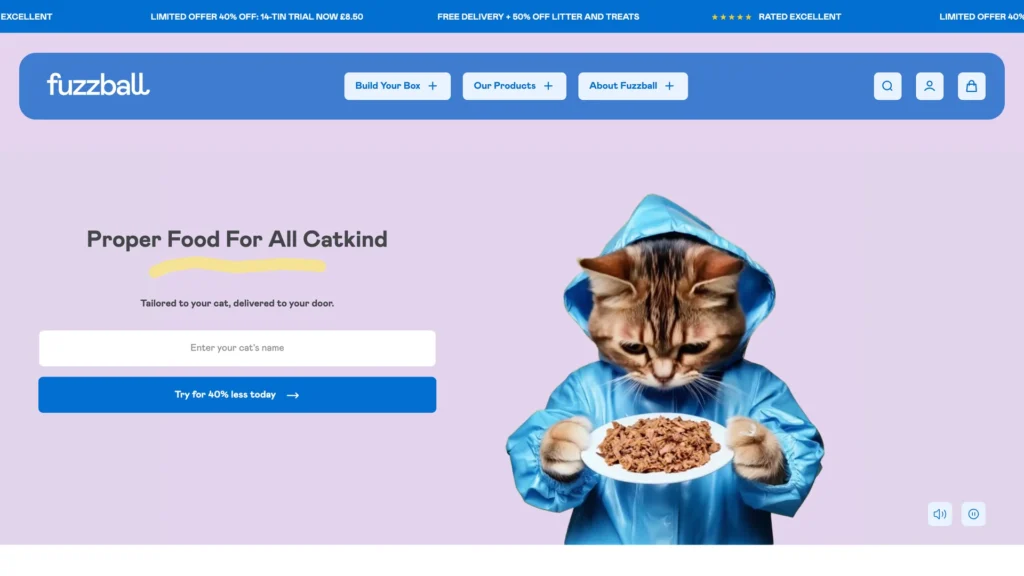
At-a-glance summary: Fuzzball is a UK-based cat food brand offering high-quality, nutritionally balanced meals designed for daily feline feeding routines. Because cats require consistent and predictable nourishment, Fuzzball’s products are a natural fit for replenishment subscriptions that keep pet owners ahead of their needs.
Subscription availability: Subscription-only
Positioning: Built with curiosity, humor, and a love for “all catkind,” Fuzzball combines premium ingredients with a playful brand experience. Their mission centers on making proper cat food accessible while giving owners confidence that they will never run out of essentials.
How they use subscriptions: Fuzzball’s subscription model is designed around flexibility and long-term retention. Customers personalize their cat’s meals by selecting recipes and delivery frequency, creating a feeding plan that matches real consumption patterns. Because the product is essential and used multiple times daily, automated deliveries remove the risk of running out while making ongoing nutrition care effortless.
Conclusion
Subscriptions work best when they fit naturally into the rhythms of customers’ lives. Across these five verticals, the brands highlighted here show how consistency, convenience, and thoughtful product design encourage shoppers to stay engaged. When brands reduce friction, offer meaningful flexibility, and build value into every recurring order, subscribers respond with long-term loyalty.
At Recharge, we see this pattern across thousands of merchants. The strongest subscription programs help customers stay ahead of their needs and give them clear control over how deliveries work. As more brands adopt recurring models, those that invest in intuitive experiences and habit-supporting incentives will continue to lead their categories.
Frequently asked questions
Which ecommerce verticals are best suited for subscription models?
Verticals with naturally recurring customer needs like health & wellness, food & beverage, home, pet, and beauty & personal care are best suited for subscriptions.
What is the difference between replenishment and curation subscription models?
Replenishment subscriptions focus on sending the same or similar products on a predictable cadence. Curation subscriptions focus on discovery and variety, delivering themed or curated sets of products.
How do subscriptions impact customer lifetime value (LTV)?
Subscriptions can significantly increase LTV by turning one-time purchases into recurring revenue.
Should brands offer subscription-only or both one-time and subscription options?
Subscription-only models work well for highly recurring purchases, while hybrid options offer flexibility.
How can brands decide if their product is a good fit for subscriptions?
Products with predictable use cycles, frequent replenishment needs, and strong routine alignment are ideal candidates.
Categories

Related articles
Explore additional content that complements what you’ve just read.
Why the most innovative subscription brands are scaling on Shopify + Recharge

Meet the winners of the Tomorrow Brand Challenge

From insights to action: How Oats Overnight puts data & customers at the center

From startup to scale: The tech decisions behind Mammoth Brands’ massive growth
Subscription loyalty at scale: Lessons from Bobbie’s customer journey playbook