
The quarterly upgrade: subscription retention’s most underused lever
Published August 2026
Published Aug 2026
6 min read
AI Summary
Longer billing cycles churn less — and the data is clear on when to act. Brands that upgrade subscribers from monthly to quarterly billing right after their first order see meaningfully lower churn than those that wait. Based on data from 20,000+ subscription brands.
Protein is migrating out of the supplement aisle and onto the breakfast table. NOON’s canned liquid breakfast is on Target shelves, sparkling-protein drinks are everywhere, and products that were once an occasional treat are becoming a daily habit, as Express Checkout has tracked.
There’s a solid retention strategy in that on its own: the more often and consistently you get customers using your product, the longer they tend to stay.
But there’s a second lever most operators leave untouched, and unlike the product, you can change it after the sale: the billing cycle.
Looking at renewal across 65 million subscriptions started between March 2025 and February 2026, one pattern holds across almost every vertical. The longer the interval a subscriber is on, the lower the churn.
Brands of all kinds run every cadence you can think of: weekly, monthly, bi-monthly, quarterly, semi-annual, annual. The limit does not exist, so to speak.
For the sake of simplicity, let’s narrow in on three, monthly, quarterly, and annual. Here’s the pattern:
Monthly plans churn the most, quarterly noticeably less, and the longest cycles least of all. Annual is the extreme, roughly 3x lower churn than monthly.
So should you just offer annual subscriptions? Not exactly. An annual cadence is a hard ask for the average subscriber: a big payment upfront, not much trust in the brand yet, uncertainty about whether they will still want it in a year, perishability, and the list goes on.
But, there is a sweet spot right in the middle: moving a subscriber from monthly to quarterly, early, before the point where most subscribers drop off.
What a longer billing cycle actually does
The longer the cycle, the less often a subscriber has to decide whether to stay. A monthly plan asks that question every 30 days. Quarterly asks once a quarter. Fewer decision points, and each charge covers more product, so more subscribers stay simply because they’re asked to leave less often. Churn steps down at every step up the ladder.
| Billing interval | Share of subscribers | Cumulative churn (lifetime) |
|---|---|---|
| Monthly | 60.7% | 84.2% |
| Quarterly | 14.7% | 67.7% |
| Annual | 3.0% | 30.1% |
It’s important to note these are cumulative figures, both active churn (cancellations) and passive churn (failed payments) over each subscriber’s life, so read them as directional, not as a monthly rate.
Most subscribers are lost in the first two orders
Across the network, the first two renewals decide almost everything. About two-thirds of subscribers continue past their first order, and under 40% are still around by the third. After that it flips. Every later order retains better than the one before, and the subscribers who clear the first two or three orders tend to stay for good.
So the danger zone is the first two to three orders. On a monthly plan, that’s roughly the first three months, and the subscriber hits a cancel-or-continue moment every single month right through it.
The move: offer quarterly at post-purchase
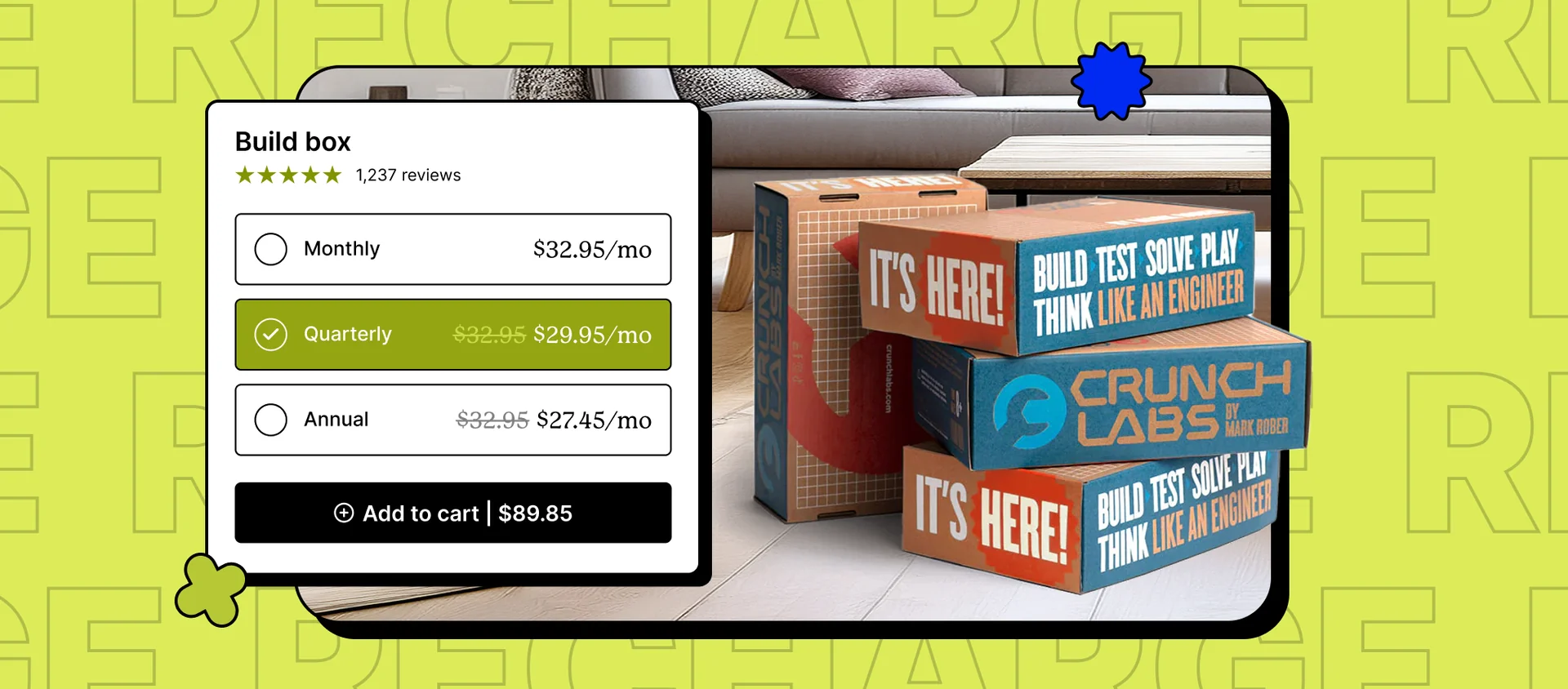
The quickest and smartest move brands can make is to offer the switch to quarterly right after the first order, automatically, as a post-purchase upsell. In one move, the next two monthly charges, and the two cancel decisions that come with them, become a single quarterly charge.
A brand collects month one, then immediately bills for the next three. That’s four months of product and revenue secured while the subscriber is still in the honeymoon window, before the cliff.
And it carries them to the far side of it, where the per-order renewal rate is already above 70% and climbing. The average monthly subscriber who churns is gone by about day 77, so a 90-day quarterly commitment reaches just past where most of them would have left.
Does this hold in every category?
Mostly yes, though the size of the effect varies by category. The first-two-orders cliff shows up in every major category we analyzed. It’s steepest in beauty and personal care, where the drop after the first couple of orders is sharpest, so the quarterly upgrade has the most to gain there. The pet category has the least dramatic drop-off between order 1 and 2, as retention is driven less by the billing cycle and more by what the subscriber does at each order, so a skipped order is the warning sign and the fix is to catch it, not just lengthen the bill. Everywhere else, the quarterly upgrade is the obvious choice.
Where the product is perishable, the same logic still works. You just separate the billing from the shipping. A prepaid quarterly plan bills for three months but still ships monthly, so a fresh-food or beverage brand can capture the commitment without asking anyone to store a quarter of product at once.
What to do
- Read your own renewal by order and by billing interval, not just a blended churn rate. Your subscription analytics will almost certainly show the first two orders are where you lose people.
- Offer a quarterly upgrade at post-purchase, automatically, so it lands before the first cancel decision.
- Use prepaid where the product is perishable: quarterly billing, monthly shipping.
- In pet and similar categories, pair the cadence move with action at the order itself, catching a skip or offering a swap, using churn prevention tools, since the cycle alone won’t carry it.
- Treat it as a test. Move a cohort to quarterly early and watch whether they clear the first-order cliff at a higher rate than your monthly cohort did.
tl;dr… the longer the billing cycle, the lower the churn, but the version that works across every category isn’t annual, it’s moving monthly subscribers to quarterly right after their first order. It secures about four months of product and revenue upfront and skips the early cancel decisions where most subscribers drop off.
About this report
These insights come from subscription cohorts across the Recharge network, 65.1 million subscriptions started at 13,158 brands actively selling on Shopify, in monthly cohorts from March 2025 through February 2026. We looked at cumulative churn by billing interval and at renewal order-by-order.
A small caveat. The churn figures are cumulative over each subscriber’s life and include both active and passive churn, so they’re directional rather than a periodic rate. The order-by-order view pools all billing intervals, so it maps most cleanly onto monthly plans, which are the majority. One more caveat: subscribers on longer cycles tend to be more committed to begin with, so this shows the mechanism, fewer and later cancel decisions with revenue banked upfront, not proof that moving a given subscriber reproduces it. Test the upgrade against your own cohort.
Frequently asked questions
Most churn early. Across 65 million subscriptions, about two-thirds of subscribers continue past their first order, and fewer than 40% remain by the third. After the first two or three orders, retention climbs with every cycle. The first two orders are where a subscriber is won or lost.
Move subscribers from monthly to quarterly right after their first order, as an automatic post-purchase upgrade. A monthly plan forces a cancel-or-continue decision every 30 days; a quarterly upgrade removes the next two and carries subscribers past the first two orders, where most churn happens.
It’s an offer to change the subscriber’s plan right after checkout, before the next charge. For retention, the highest-leverage version is upgrading monthly billing to quarterly, which locks in more product upfront and cuts early cancellations.

Related articles
Explore additional content that complements what you’ve just read.

Inside ChargeX East: How the best brands are driving retention in the agentic era
CPG product sampling: why a $0.99 intro offer retains subscribers nearly 4× better than a free one
The first-order discount sweet spot for CPG subscription brands is deeper than you think

Ask your store anything, get the answer from Remi
There’s a fresh wave of pet-food M&A, and the subscription data shows what’s actually worth the premium